Knotless Braids vs Box Braids: What's the Difference?
· 6 min read
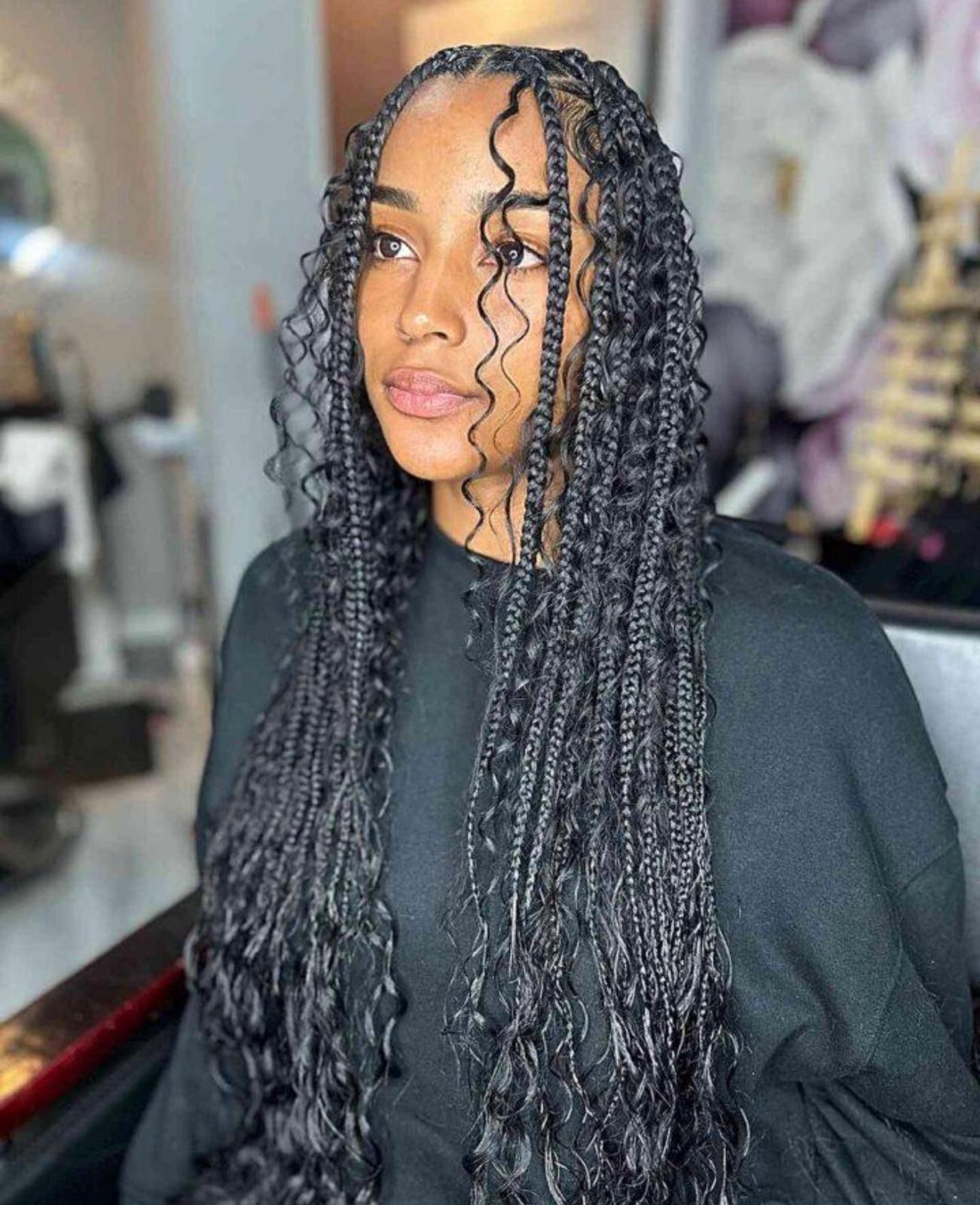
Scroll through braid photos and knotless and box braids can look almost identical. Sit through both installs and you'll never confuse them again.
The difference comes down to one moment: how the extension hair joins your natural hair at the very start of the braid. Everything else — comfort, look, price, how the style ages — follows from that.
How box braids are built
The traditional box braid starts with a knot. The braider takes your parted section of natural hair, wraps the full piece of extension hair around it, and secures it with a small knot right at the root before braiding down.
That knot is what gives box braids their signature look: a defined, uniform start to each braid and a full, dense appearance right from the scalp. It's also what holds the style so securely — box braids are famously durable and easy to style into buns and updos without slipping.
The trade-off is that the full weight of the extension sits at the root from minute one, and the knot itself creates a small pressure point on the scalp.
How knotless braids are built
Knotless braids start with your natural hair alone. The braider begins the braid with just your hair, then feeds in small pieces of extension gradually over the first inch or two until the braid reaches full thickness.
There's no knot and no sudden weight. The braid grows into the extension instead of being anchored to it, which is why the root lies flat against the scalp and the braid can move freely in any direction.
Tension and scalp comfort
This is the difference most people feel immediately. Knotless installs are noticeably more comfortable — no tightness on the drive home, no sleeping upright the first night, no headache on day two.
Box braids are heavier at the root, and even a skilled install carries more tension there. For anyone with a sensitive scalp, a fine or thinning hairline, or a history of edge loss, knotless is the safer choice.
That said, tension is largely a technique issue, not just a technique-type issue. A well-installed box braid should never hurt. If any style makes your scalp sore, that's a tension problem worth speaking up about in the chair.
How they look at the root and edges
Knotless braids have a flatter, more natural-looking root — the braid appears to grow directly out of your scalp, which reads especially well in a middle part or a pulled-back style. They also lie down more easily around the hairline.
Box braids sit fuller and more uniform at the base. If you want that classic, structured, all-one-thickness look — the timeless silhouette — box braids deliver it better.
Book Your Knotless Braids
Featherlight tension, flat roots, and a consultation that gets you into the right style the first time.
Book Your AppointmentInstallation time and price
Knotless braids take longer. Feeding hair in gradually is more meticulous work, and the same head can take one to three extra hours compared to a box braid install of the same size.
That time shows up in the price: knotless typically runs somewhat higher than box braids at the same size and length. Box braids are the more budget-friendly option, and for many people they're the right call.
How each ages over the weeks
Box braids hold their crisp look longer at the base, because the knot keeps the section tight. When they do grow out, the knot becomes visible as it lifts away from the scalp, which is the point where most people book a take-down.
Knotless braids grow out more gracefully — there's no knot to reveal, so the loosening is gradual rather than sudden. They tend to frizz slightly earlier at the root, but the frizz reads softer. Both styles are best taken down within six to eight weeks.
Who tends to prefer each
Knotless is the go-to for anyone with a tender scalp, fine or previously damaged edges, a preference for versatile styling, or long lengths where weight matters. It's also the more popular pick for a first-time braid client, simply because the experience is easier.
Box braids suit people who want a classic look, want a lower price point, plan to keep the style pulled up often, or have a resilient scalp and want maximum hold and structure.
How to choose
Here's the simple framework. If your priority is maximum comfort, the most natural-looking root, and the gentlest option for your hairline, go knotless. If you want a classic, uniform look at a friendlier price and your scalp handles tension well, box braids will serve you beautifully.
Still unsure? Bring it to your consultation. We'll look at your density, your edges, and the length you have in mind, and give you a straight recommendation — including when the cheaper option is genuinely the better one for you.
Related services
Not sure which one is yours?
Book a visit and we'll help you decide between knotless and box braids based on your hair — not on a trend.
Book Your Appointment